


Thorbjørn Harr Net Worth 2026 is unconfirmed — no published income figure, no tax-list entry and no credible estimate exists for the Norwegian actor, and this article will not invent one. What can be verified is a career most actors would trade a fortune for: a boy discovered in a schoolyard by NRK, a quarter of a century on the National Theatre stage, a villain’s death on one of the biggest television shows in the world, and, at 52, a run of films that includes a Palme d’Or winner and an Oscar entry. The money behind a career like that is a fair question — and almost none of it is public.
The boy NRK found in a schoolyard
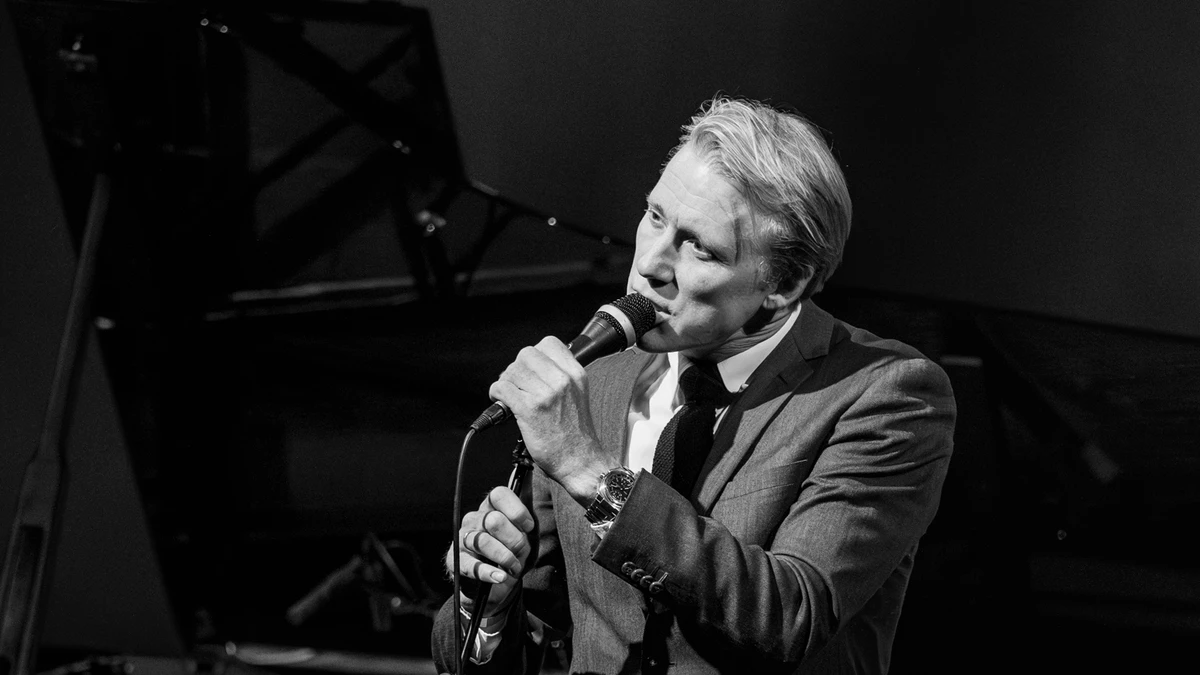
Thorbjørn Harr was born on 24 May 1974 in Oslo, and his acting career began the way casting directors dream about and the rest of us never experience: he was discovered as a teenager in a schoolyard by scouts from NRK, the Norwegian public broadcaster, who were looking for young actors for a youth series. His first roles came as a child in NRK programmes such as U and Blikkbåx; his breakthrough was Berit Nesheim and Torun Lian’s Frida, first in Midt i smørøyet (1989), then as the feature Frida – med hjertet i hånden (1991). At fourteen he was already carrying a series, Onkel Gustav og kassettmysteriet. His early life is set out in his entry in the Store norske leksikon.
What happened next is what separates a child actor from a working actor. Harr did not drift into adult roles on momentum; he trained for three years at Statens teaterhøgskole, the Norwegian National Academy of Theatre, from 1997 to 2000, and joined the National Theatre the year he graduated. He has been there ever since. That decision shaped his earnings too: a salaried stage actor with screen work on top, not a Hollywood pay scale. He married Tai Victoria Grung in 2006; they have three children.
There is another side to him that the credits do not capture. He plays the saxophone, and with double-bassist Aslak Hartberg he forms the jazz duo Harr & Hartberg, three albums released between 2014 and 2020. He also spent fifteen years in the improvisational group Teatersport Oslo alongside Harald Eia. None of it made him rich. All of it explains why, when fame finally came, he arrived as a complete performer rather than a lucky face.
Twenty-five years at the National Theatre

If you want to understand Thorbjørn Harr, start with the National Theatre, because that is where he has spent most of his working life. He debuted there in 2000 as Bratsberg in Ibsen’s De unges forbund; by January 2007 he had played in almost twenty of its productions. The roles that followed read like a tour of the European canon: Håkon Håkonsson in Kongsemnerne (2005), Figaro (2004), Tom in The Glass Menagerie (2007), Torvald Helmer in A Doll’s House (2010) and Krogstad ten years later, Mr Rochester in Jane Eyre (2022) and Kurt in Dødsdansen (2022). Leading parts, played in one house, in one city, year after year — the full record is on his Wikipedia biography and filmography.
The work that won him prizes, though, was not the classics but the experiments. Between 2010 and 2012 he was artistic director of Komilab, the Comedy Lab at the National Theatre’s Torshov stage, with Mariann Hole and Jan Gunnar Røise, and the project won the 2012 Heddaprisen for Special Artistic Achievement. The same year he was nominated for the Hedda for Best Leading Actor as Leon in Dennis Kelly’s Orphans; he did not win. The Hedda win is recorded in the Sceneweb database of Norwegian theatre awards, which lists the Komilab prize in full.
Then there is Chet spiller ikke her, the 2009 production that may be the most personal thing he has ever done on stage. Harr adapted Lars Saabye Christensen’s text, played Daniel — a musician obsessed with the trumpeter Chet Baker — played the saxophone live, and co-directed with Sofia Jupither. It won the Norwegian Theatre Critics Award for 2009/10 and NRK Radio Theatre’s Blå fugl prize, dated 2011. The theatre has trusted him in return — since 2021 he sits as the employees’ representative on its board, arguing for the renovation of its stages.
He is not finished with the stage either: he plays the title role in Peer Gynt at Gålå in 2026 and 2027, Ibsen’s great wanderer, in the open-air production that has become a Norwegian summer institution.
Jarl Borg and the blood eagle

Outside Norway, most people know Thorbjørn Harr as Jarl Borg — and because of how he died. In Vikings, the History Channel drama, Borg was the powerful earl of Götaland, husband of Torvi and father of Guthrum, and the main antagonist of the first two seasons — he manipulated Rollo, attacked Kattegat, and made himself the enemy Ragnar Lothbrok could not ignore. Harr played him across nine episodes in 2013 and 2014, and his exit in season two, episode seven — “Blood Eagle”, broadcast on 10 April 2014 — is one of the most talked-about deaths in the series: Ragnar executes him with the blood eagle, a ritual killing staged in full, terrible detail. The character and the episode are documented in the list of Vikings characters on Wikipedia, and his agent’s CV confirms the two-season engagement.
It is worth pausing on what that role did and did not do. Vikings was a genuine international hit, and Jarl Borg is the kind of villain audiences remember long after the heroes blur. But Harr was a guest and recurring player, not a series lead, and the show was made more than a decade ago. A supporting fee on a cable drama in 2013 was good professional money, not fortune-building money, and no figure has ever been published. What the role gave him was a calling card: a face casting directors outside Norway recognised, and proof he could hold his own in English, in period costume, against a large international cast.
A film career running in parallel
While the stage was his home, the films kept coming. His film debut was Mot Moskva in 2003, as Vassi, earning an Amanda nomination for Best Actor, Norway’s national film award. Joachim Trier’s Reprise (2006) cast him as Mathis Wergeland; Mars & Venus (2007) gave him a leading role as Mathias. Then came Two Lives (2012), as the young Bjarte Myrdal; The Last King (2016), as Inge Bårdsson; and Beyond Sleep the same year. The full filmography is on his agent’s CV at Agentfirman.
The later films show a performer in demand across genres. In Paul Greengrass’s 22 July (2018), the Netflix dramatisation of the Utøya attacks, he played Sveinn Are Hanssen. In The Tunnel (2019) he was Stein, in one of Norway’s biggest box-office hits of its year. Disney’s Togo (2019) cast him as Charlie Olsen. He played the father in both Ash Lad films, the King in Three Wishes for Cinderella (2021), and Oscar Torp in Gold Run (2022), the true story of Norway’s wartime gold reserves. And in Dag Johan Haugerud’s Sex (2024) he was one of the leads, a performance that earned another Amanda nomination for Best Actor. Family films, disaster movies, historical drama, art-house work — a working actor taking the work, year after year.
There is also the work you hear rather than see. Harr is the Norwegian voice of Kristoff in Disney’s Frozen, including Frozen 2 — his voice is in Norwegian living rooms every Christmas. He voices the lion cub Løveungen in the Karsten og Petra films and Kasper in Folk og røvere i Kardemomme by (2022). Voice work pays steadily, but no figure for any of it has been published.
The American detour — and the voice in the snow
Vikings was not his only English-language work. In 2015 he appeared in the American series Younger, on TV Land, as Anton Björnberg, a Swedish author and the love interest of Kelsey Peters, played by Hilary Duff — a recurring role in season one. He worked opposite Julianne Moore in Bel Canto (2018), in Stockholm the same year, and in the Dutch Beyond Sleep. His credits are on the Younger series page on Wikipedia: a Norwegian actor who could be hired anywhere, and who kept coming home to the National Theatre between jobs. He never chased a franchise or moved to Los Angeles — the opposite of the career that produces a large published net worth.
What an actor like this actually earns
So what can be said, honestly, about Thorbjørn Harr’s money? First, what cannot be said. No Norwegian newspaper — not VG, not Dagbladet, not NRK, not Aftenposten — has published his personal tax-list income or wealth figures, and searches for them turn up nothing. The lists are searchable only by logging in to the Skatteetaten tax-list search, and no press outlet has republished his numbers. The 2025 lists, covering the 2024 income year, are not due until 2 December 2026. Until a newspaper publishes them, there is nothing to quote.
Second, the company record. The business register Proff.no lists Harr as chair of two small companies, Herrharr AS and Monologue AS, and as a board member of Nationaltheatret AS. Those are company roles, not personal income: actors commonly run freelance work through a company, and its accounts are a different thing from a personal fortune. The Proff.no register entry is cited only to be complete — it is not a wealth proxy, because it cannot be one.
What can be said, carefully, is the shape of the income. A permanent actor at the National Theatre earns a state-theatre salary — secure, respectable, and a long way from the sums quoted for film stars. Screen roles, voice work, audiobooks and the occasional international job add freelance fees on top, varying wildly from a small Norwegian film to a Netflix production. An Amanda win and a Hedda win raise a performer’s rate, but they do not multiply it by ten. Harr is a well-paid professional in a small industry, with no public evidence of wealth beyond a long, steady career.
2024–2026: the late-career surge
If there is a second act to this career, it is happening now. In 2024 he led Sex, Amanda-nominated, and appeared in Netflix’s La Palma as Jens Uvdal. In 2025 he played Lukas in Patrik Syversen’s Demring (Dawning), which premiered at Fantastic Fest. And in 2026 he appears in two films on the biggest stages in world cinema: Cristian Mungiu’s Fjord, as the Chief Policeman alongside Sebastian Stan and Renate Reinsve, a film the national encyclopedia calls a Palme d’Or winner; and Halkawt Mustafa’s No Paradise If You Are Killed by a Woman, as Anders, a Norwegian security official — premiered at Venice on 7 September 2026, selected as Iraq’s Oscar entry for Best International Feature, with a Norwegian release set for February 2027. The premiere and the Oscar selection are confirmed by the Norwegian Film Institute.
The recognition has followed. In August 2020 he won the Amanda for Best Supporting Actor for Barn (Beware of Children) — recorded by the Nordic Film & TV Fund. On 16 August 2025 he was given a stone on the Haugesund Walk of Fame. And in 2026 he won a Storytel Award as Audiobook Narrator of the Year in crime and suspense. His nominations tell the same story: Amanda Best Actor in 2004 and again in 2024, twenty years apart; Gullruten nominations for Kielergata (2019), Etterglød (2023) and Makta (2024), as the former prime minister Kåre Willoch. And in Norsemen he played a comic Jarl Bjørn beside the terrifying Jarl Borg of Vikings — the same actor, the same era, two entirely different men.
The fair summary: Thorbjørn Harr Net Worth 2026
Thorbjørn Harr Net Worth 2026 is unconfirmed, and after everything above, that should not be a surprise. He is 52 years old, a National Theatre actor since 2000, a Hedda winner, an Amanda winner, a Walk of Fame honouree, a face known around the world as Jarl Borg and a voice known to every Norwegian child as Kristoff. There is no published salary, no published tax-list figure, and no credible estimate to quote — so there is no net worth number in this article, only the facts that would have to support one if it ever appears. What is certain is the career: a quarter of a century on one of Norway’s great stages, a filmography from Mot Moskva to a Palme d’Or winner, and a late-career surge still going. The money stays private.
Sources & References
- Store norske leksikon — Thorbjørn Harr (biography, theatre roles, awards, recent work): https://snl.no/Thorbj%C3%B8rn_Harr
- Wikipedia — Thorbjørn Harr (biography, filmography, awards): https://en.wikipedia.org/wiki/Thorbj%C3%B8rn_Harr
- Agentfirman — Thorbjørn Harr CV (film, television and theatre credits): https://agentfirman.com/cv/?id=537
- Sceneweb — The Hedda Award 2012 (Komilab, Special Artistic Achievement): https://sceneweb.no/en/awarding/28584/The_Hedda%20Award%202012
- Wikipedia — List of Vikings and Vikings: Valhalla characters (Jarl Borg): https://en.wikipedia.org/wiki/List_of_Vikings_and_Vikings:_Valhalla_characters
- 42 Management — Thorbjørn Harr (Vikings, seasons 1–2): https://www.42mp.com/talent/thorbj%C3%B8rn-harr
- Wikipedia — Kieler Street (Jonas Schulman/Stefan, 2018): https://en.wikipedia.org/wiki/Kieler_Street
- Wikipedia — Younger (TV series) (Anton Björnberg, season 1): https://en.wikipedia.org/wiki/Younger_(TV_series)
- Nordic Film & TV Fund — Record Amanda wins for Beware of Children (Amanda 2020, Best Supporting Actor): https://nordiskfilmogtvfond.com/news/stories/record-amanda-wins-for-beware-of-children
- Norwegian Film Institute — No Paradise If You Are Killed by a Woman, world premiere Venice 2026: https://www.nfi.no/en/news/halkawt-mustafas-nye-film-faar-verdenspremiere-i-venezia
- Wikipedia — No Paradise If You Are Killed by a Woman (Venice premiere, Iraq Oscar entry): https://en.wikipedia.org/wiki/No_Paradise_If_You_Are_Killed_by_a_Woman
- Skatteetaten (Norwegian Tax Administration) — Search the tax lists: https://skatteetaten.no/skjema/sok-i-skattelistene/
- Proff.no — Thorbjørn Harr, company roles (Herrharr AS, Monologue AS, Nationaltheatret AS): https://www.proff.no/roller/thorbj%C3%B8rn-harr/oslo/843107
- Rotten Tomatoes — Thorbjørn Harr (filmography): https://www.rottentomatoes.com/celebrity/thorbjorn_harr