


Tarjei Bø Net Worth 2026 is unconfirmed — no published income figure, no tax-list entry and no credible estimate exists for the Norwegian biathlete, and this article will not invent one. That is the honest answer for a man who spent seventeen winters at the top of one of the hardest sports on snow, and who walked away from it in March 2025 on his own terms, a month after winning a World Cup sprint and announcing his retirement in tears. What can be verified is a career most biathletes would trade everything for: seven Olympic medals, 28 World Championship medals, fifteen individual World Cup wins, an overall crystal globe won at 22 — and then, remarkably, a discipline globe won at 35, in his final season.
Stryn, and the brother who came first
Tarjei Bø was born on 29 July 1988 in Stryn, a small municipality in the Nordfjord district of western Norway, and he raced throughout his career for the local club Markane IL. He is 1.85 metres tall, and he is the older brother of Johannes Thingnes Bø, the most decorated male biathlete of his generation — five years older, and the one who got there first. For the first half of Tarjei’s career he was the Bø brother the world knew, and for the second half he was the one standing next to a phenomenon, doing the unglamorous work that wins relays. His career is set out on his English Wikipedia biography, and his results are recorded on his IBU athlete profile.
The early signs were there before he was out of his teens. At his first Junior World Championships in 2006, in Presque Isle in the United States, he won gold in the individual and silver in the pursuit. A year later in Martell, Italy, he took silver in the pursuit again and silver with the Norwegian relay team. At the 2009 Junior World Championships in Canmore, Canada, he collected bronze in both the sprint and the pursuit, and at the European Championships in Ufa, Russia, the same year, he won gold in all four races he entered — individual, sprint, pursuit and relay. None of that answers Tarjei Bø Net Worth 2026, but it explains why the question gets asked: by 21, he was already the kind of athlete people assume must be rich.
He made his World Cup debut on 26 March 2009 in Khanty-Mansiysk, Russia, finishing 61st. The following season he worked his way up through the IBU Cup and earned World Cup starts in Pokljuka, Oberhof and Ruhpolding. In Pokljuka he finished fourth. In Oberhof he was part of a winning Norwegian relay team. On 29 January 2010 he was named as one of the 99 athletes Norway would send to the Vancouver Winter Olympics.
Vancouver at 21, and the winter everything changed
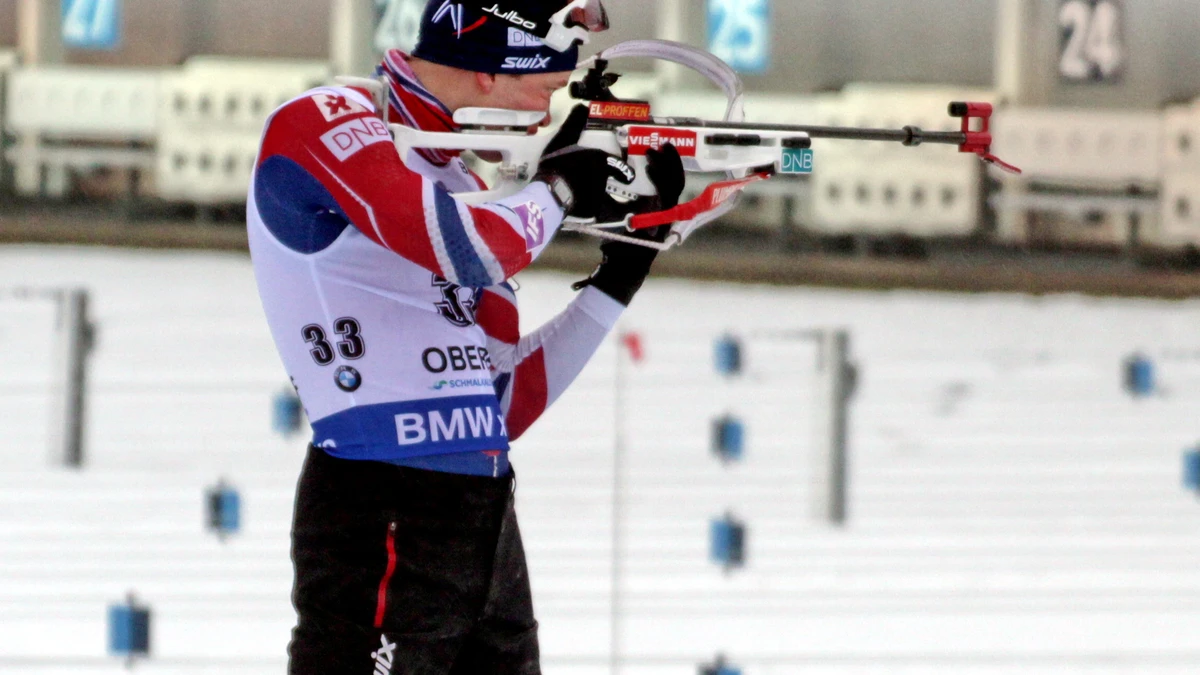
His first Olympic event, on 18 February 2010, ended in 21st place in the individual. Days later, he was chosen for the Norwegian relay team, and he ran a leg of the 4 × 7.5 km relay that won gold ahead of Austria and Russia. He was 21 years old, in his first senior season, and already an Olympic champion.
Then came the season that made him. On 10 December 2010 he won the World Cup sprint in Hochfilzen, Austria — his first individual World Cup victory — and the next day he won the pursuit as well. He took the yellow bib of the overall World Cup leader. In Oberhof he won the sprint and the mass start. At the World Championships in Khanty-Mansiysk in March 2011 he won his first individual gold, in the 20 km individual, beating the Russian Maxim Maksimov by 40 seconds despite missing one target to Maksimov’s clean shooting. He also won gold in the relay and the mixed relay, with bronze in the sprint, pursuit and mass start alongside them.
The season ended in Oslo, where the overall title came down to the last race. He went into the final mass start with a lead of 31 points over his teammate Svendsen. Svendsen won the race; Bø finished eighth, and that was enough. He won the overall crystal globe by five points, with 1,110 points to Svendsen’s 1,105, and he took the sprint and pursuit discipline titles too. The 2010–11 Biathlon World Cup season page records the standings: Tarjei Bø first overall, five points clear, at 22 years old.
The long middle: relays, near-misses and a second peak at 35
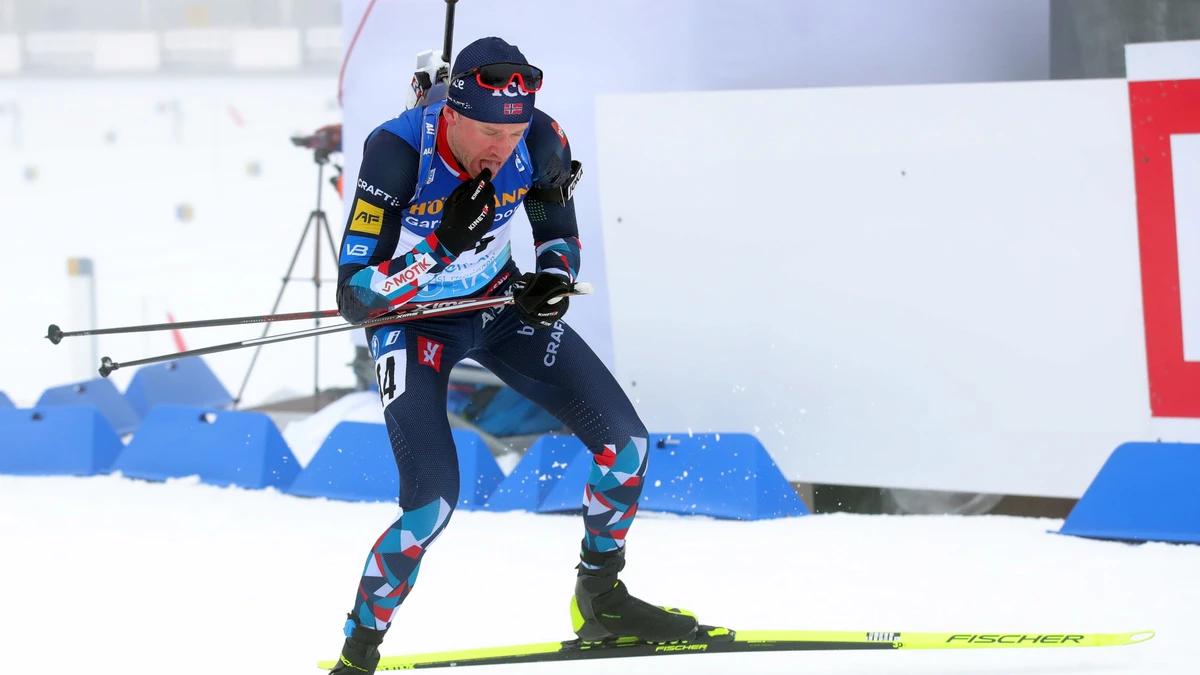
What followed was not decline but a different kind of career — long, reliable and strangely underrated. The overall globe never came again, but the medals kept coming, most of them in the team events where Norway were nearly unbeatable for a decade and a half. At the World Championships he collected 28 medals across twelve championships from 2011 to 2025: twelve gold, seven silver and nine bronze. Only two of those golds were individual — the 2011 individual and the 15 km mass start at Nové Město in 2013. The other ten came in relays and mixed relays, and that is not a lesser achievement in biathlon. A relay leg is skied alone, with the whole team watching, and Bø was the man Norway kept picking for it.
The Olympics tell the same story. He raced at four Games, from Vancouver 2010 to Beijing 2022, and won seven medals: three gold, two silver and two bronze. The golds were the Vancouver relay, and then, twelve years later, both the men’s relay and the mixed relay at Beijing 2022. The silvers were the relay at Pyeongchang 2018 and the pursuit at Beijing 2022. The bronzes were the relay at Sochi 2014 and the sprint at Beijing 2022. He never won an individual Olympic gold, and that gap is worth stating plainly, because it is the difference between his record and his younger brother’s. Johannes Thingnes Bø won five Olympic golds. Tarjei won three, all in relays — and he won them twelve years apart.
The World Cup numbers fill in the rest: seventeen seasons, 408 races in all, fifteen individual victories, 72 individual podiums, and five discipline titles — the sprint in 2010–11 and again in 2023–24, the pursuit in 2010–11, the mass start in 2020–21 and the individual in 2021–22. That second sprint globe came in his final season, at 35, thirteen years after the first. At the 2024 World Championships in Nové Město he took silver in the 20 km individual, his last individual World Championship medal.
Antholz, 24 January 2025: the announcement after a win
His younger brother had announced his own retirement six days earlier, on 18 January 2025. Tarjei had promised himself something private: the next time he won a race, he would tell the world he was stopping. On 24 January 2025, in Antholz-Anterselva, Italy, he won the 10 km sprint in 23 minutes 51 seconds, with clean shooting, his first victory at that venue and his fifteenth individual World Cup win. Minutes later, in tears in the mixed zone, he told Norwegian television that this would be his last season. As Izvestia reported, quoting Reuters, he had felt all winter that the time had come, despite the Olympic Games in Milano-Cortina lying a year ahead, and he would not defend his two Beijing relay titles there. That decision is also the moment Tarjei Bø Net Worth 2026 stopped being a question about a rising athlete and became a question about a finished career, with no more seasons left to add to it.
There was still a final chapter to write. At the World Championships in Lenzerheide, Switzerland, in February 2025, he skied the second leg of the Norwegian men’s relay alongside Endre Strømsheim, Sturla Holm Lægreid and his brother Johannes, and the team won gold in 1 hour 18 minutes 18.1 seconds, ahead of France and Germany. It was his twelfth World Championship gold, and his last. The Lenzerheide men’s relay results record the team and the time. His final race came at home, in the mass start at Holmenkollen in Oslo on 23 March 2025, the last day of the World Cup season, with his brother beside him. His eyewear sponsor Julbo marked the farewell with a tribute that called the mass start the full stop on a journey of more than fifteen years.
What he has actually earned
Start with prize money, because in biathlon that much is public, and it is also modest by the standards of the sports that make people rich. In the 2024–25 season, the last of his career, a World Cup individual win paid €15,000, the overall World Cup winner received €40,000 and a discipline winner €12,000, as Etusuora’s prize-money guide sets out. The whole sport paid out €7,224,500 to 179 athletes that season, and the biggest earner was his brother Johannes, with €285,500, according to Salary Sport’s 2024–25 money list.
Tarjei’s own final season, as Salary Sport’s Tarjei Bø prize-money page records it, brought him €134,975 from 28 paid races, including €34,500 from relays. His biggest single payday was €15,000, for an individual win. At the World Championships in Lenzerheide alone he earned €21,900 from five paid races, as Salary Sport’s Lenzerheide table shows. That is an aggregator’s calculation from the IBU’s published prize scale, not an official IBU statement, and it is labelled as such here. A good season in biathlon pays roughly what a mid-level footballer earns in a month.
The rest of a biathlete’s income is sponsorship, and there the numbers stop. His long-time eyewear sponsor Julbo published a farewell tribute to him when he retired, which is the visible end of a commercial relationship that ran for years. No value has ever been published for that deal, or for any other sponsorship he held, and no salary from the Norwegian national team has ever been published either. That is the honest starting point for Tarjei Bø Net Worth 2026: one verified final season of prize money, €134,975, a career built on the IBU’s fixed prize scale, a named sponsor whose deal has no published value — and nothing else with a number attached.
What does not exist
The rest of the picture is absence, and it matters enough to spell out. No published tax-list income or wealth figure for Tarjei Bø has been found. Norway’s tax lists for 2025 are not published until 2 December 2026, as Skatteetaten confirms, so no figure from them can exist yet. No company fortune or property portfolio has been published in connection with his name. Search for Tarjei Bø Net Worth 2026 and you will find confident answers — one widely repeated biography puts it at $1.5 million, as TheCityCeleb does — but none of them shows its working. A figure with no source is not an estimate. It is a guess with a dollar sign in front of it. Tarjei Bø Net Worth 2026 stays unconfirmed because the only honest number is none.
The life after the last start
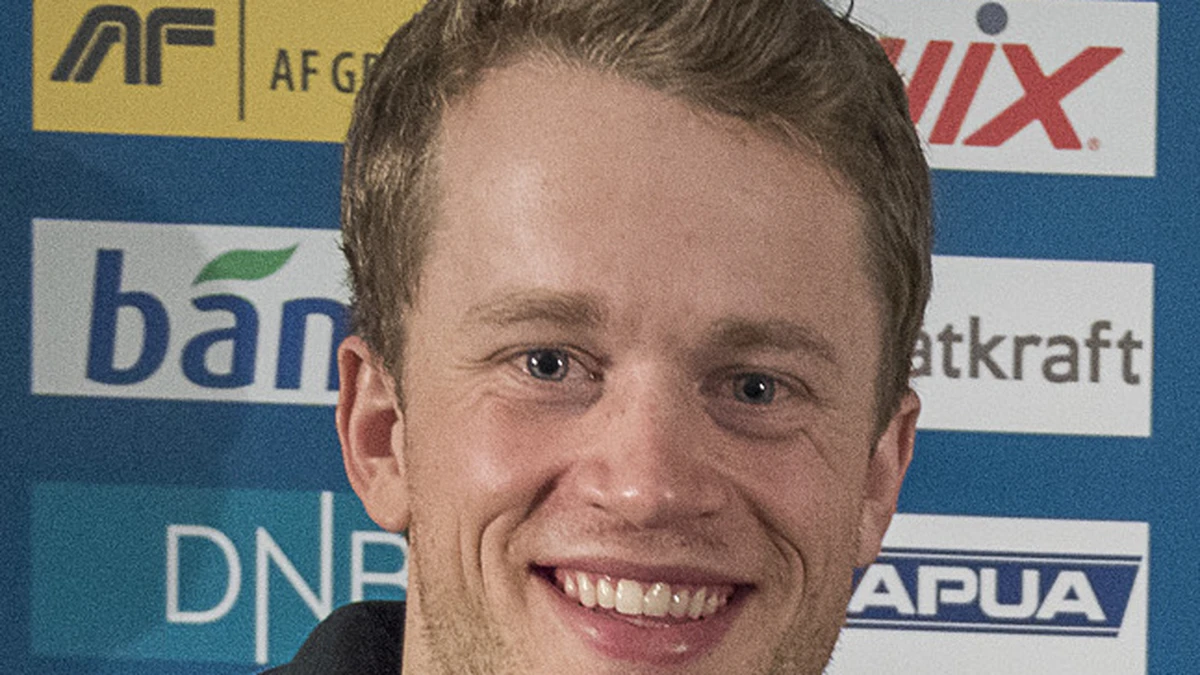
Retirement, for Tarjei Bø, was planned rather than stumbled into. Before his final season was over, he and his brother Rasmus had set up a window company, in anticipation of the day the racing stopped, as Julbo’s farewell piece records. No revenue, profit or valuation for that company has been published, and this article will not treat a new small business as a fortune — a company he co-owns is a company figure, not personal income, and there is no published figure of either kind.
He has not left biathlon altogether. Nordic Mag reports that both Bø brothers will work as consultants for NRK, Norway’s public broadcaster, at the Milano-Cortina 2026 Winter Olympics — the Games he chose not to race at, covered instead from the commentary position. No fee for that work has been published either.
The fair summary: Tarjei Bø Net Worth 2026
Tarjei Bø Net Worth 2026 is unconfirmed, and after everything above, that should not be a surprise. He is 38, from Stryn, the older brother who reached the top first: Olympic relay gold at 21 in Vancouver and again at 33 in Beijing, seven Olympic medals in all, 28 World Championship medals with twelve golds, fifteen individual World Cup wins, an overall globe at 22 and a sprint globe at 35, and a final season that ended with a win in Antholz, a last relay gold in Lenzerheide and a farewell mass start at Holmenkollen on 23 March 2025. The verifiable money is €134,975 in prize money in his final season, €21,900 of it from the Lenzerheide World Championships, a €15,000 cheque for an individual win, and sponsorships whose values have never been published. There is no tax-list figure, no company figure, and no credible net-worth estimate — only the facts that would have to support one if it ever appears. What is certain is the career: seventeen seasons, 408 starts, and a retirement announced, characteristically, immediately after a victory. The money stays private.
Sources & References
- Wikipedia — Tarjei Bø (biography, career, results, Olympics, World Championships, World Cup totals): https://en.wikipedia.org/wiki/Tarjei_B%C3%B8
- IBU — Tarjei Bø athlete profile (International Biathlon Union): https://www.biathlonworld.com/athletes/tarjei-boe
- Wikipedia — 2010–11 Biathlon World Cup (overall standings, Tarjei Bø first with 1,110 points): https://en.wikipedia.org/wiki/2010%E2%80%9311_Biathlon_World_Cup
- Wikipedia — Biathlon World Championships 2025, men’s relay (Lenzerheide, Norway gold, 1:18:18.1): https://en.wikipedia.org/wiki/Biathlon_World_Championships_2025_%E2%80%93_Men%27s_relay
- Salary Sport — Tarjei Bø biathlon prize money by season (€134,975 in 2024/25, biggest payday €15,000, relays €34,500; aggregator estimate from the IBU prize scale): https://salarysport.com/biathlon/athlete/tarjei-bo/
- Salary Sport — Biathlon prize money 2024/25 (€7,224,500 paid to 179 athletes; Johannes Thingnes Bø most, €285,500; a World Cup win €15,000): https://salarysport.com/biathlon/2024-25/
- Salary Sport — Lenzerheide World Championships 2025 prize money (Tarjei Bø €21,900 from 5 paid races): https://salarysport.com/biathlon/2024-25/lenzerheide/
- Etusuora — Prize money in Biathlon World Cup (2024/25 rates: individual win €15,000, overall winner €40,000, discipline winner €12,000): https://etusuora.com/en/news/prize-money-biathlon
- Julbo — Tarjei Bø: A Biathlon Legend Bows Out (final race, Holmenkollen mass start 23 March 2025; window company with brother Rasmus): https://www.julbo.com/en_wo/article/tarjei-bo-a-biathlon-legend-bows-out
- Izvestia — Three-time Olympic biathlon champion Tarjei Bø has announced the end of his career (Reuters, 24 January 2025, Antholz sprint win): https://en.iz.ru/en/1827928/2025-01-24/three-time-olympic-biathlon-champion-tarjei-bo-has-announced-end-his-career
- Nordic Mag — Tarjei Bø archive (Bø brothers as NRK consultants for the Milano-Cortina 2026 Olympics): https://www.nordicmag.info/en/tag/tarjei-boe-en/
- Skatteetaten — Tax assessment (2025 tax lists published 2 December 2026): https://www.skatteetaten.no/en/person/taxes/tax-assessment/
- TheCityCeleb — Tarjei Bø biography (the unsourced $1.5 million net-worth figure cited as an example of an estimate with no working shown): https://www.thecityceleb.com/biography/public-figure/sportsperson/tarjei-bo-biography-net-worth-height-age-wife-children-siblings-parents-olympic-medals-instagram/