

Henrik Kristoffersen Net Worth 2026 is unconfirmed — no published income figure, no tax-list entry and no credible estimate exists for the Norwegian skier, and this article will not invent one. What can be verified is one of the great technical-skiing careers of the modern era: 34 World Cup wins, four slalom crystal globes, three Olympic medals, two world titles, and a twelve-year fight with his own ski federation over the right to put a sponsor’s logo on his helmet — a fight he finally won in October 2026. The money behind a career like that is a fair question, and the honest answer is that most of it is not public. What follows is everything that can be verified — and what cannot.
The boy from Akershus who skied like he was angry
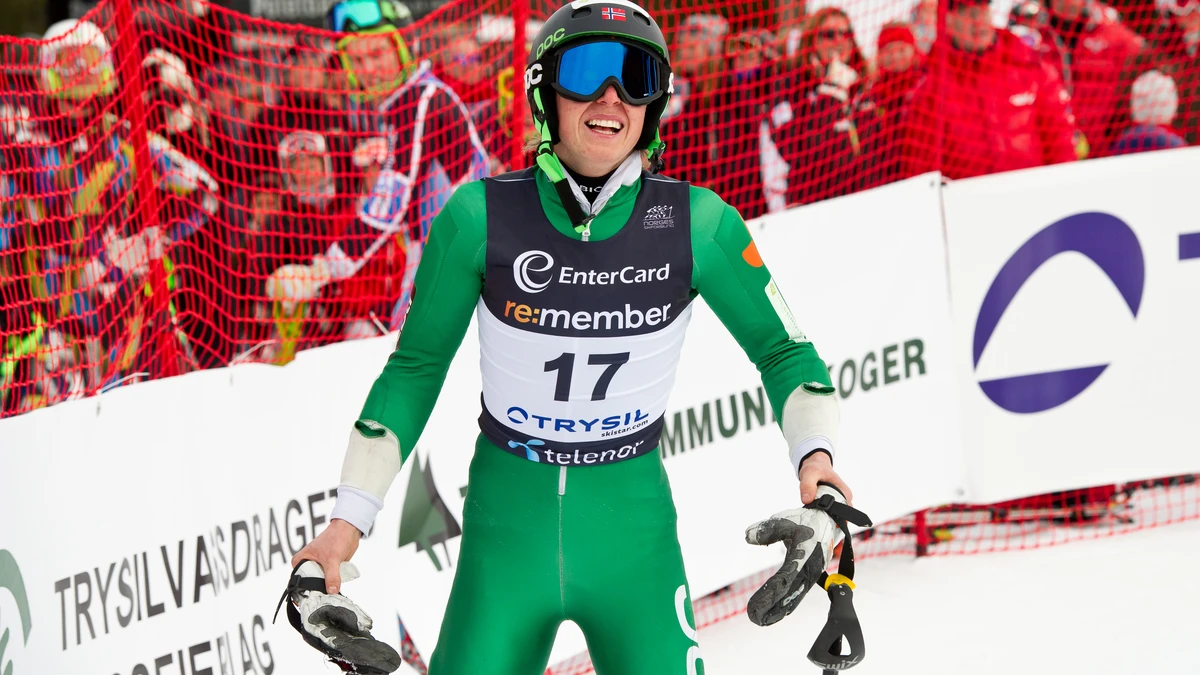
Henrik Kristoffersen was born on 2 July 1994 in Lørenskog, Akershus, just outside Oslo, and he skied for Rælingen SK, the local club. The birthplace is worth a word of care: some sources list Rælingen rather than Lørenskog, and the two towns sit side by side in the same county, so this article follows the account given by Ski Racing Media, which names Lørenskog. What is not in dispute is how fast he was. At the Junior World Championships he won more individual gold medals than any male skier in history — six of them, in giant slalom in 2012, 2014 and 2015 and in slalom in 2014 and 2015 — along with eight individual podiums, another record. He was not a promising junior. He was a junior who had already run out of juniors to beat.
The World Cup found out quickly. He made his debut on 11 March 2012 in Kranjska Gora, Slovenia, at seventeen, took his first podium — third in the Levi slalom — in November 2013, and won his first race in the same place a year later, in November 2014. Levi, a small resort in Finnish Lapland where the season’s first slalom is held under floodlights in the dark of November, became his place: he has won there twice, in 2014 and 2019, and the men’s slalom season opens there again on 15 November 2026. His career is documented in full on his Wikipedia biography, which cross-checks against the FIS record.
He was, from the start, a technical skier and nothing else — slalom and giant slalom, where the turns come fastest and the margins are thinnest. He has never raced a World Cup downhill or super-G, and he never needed to. In the technical events he became the most consistent winner of his generation.
Thirty-four wins and the Hirscher problem
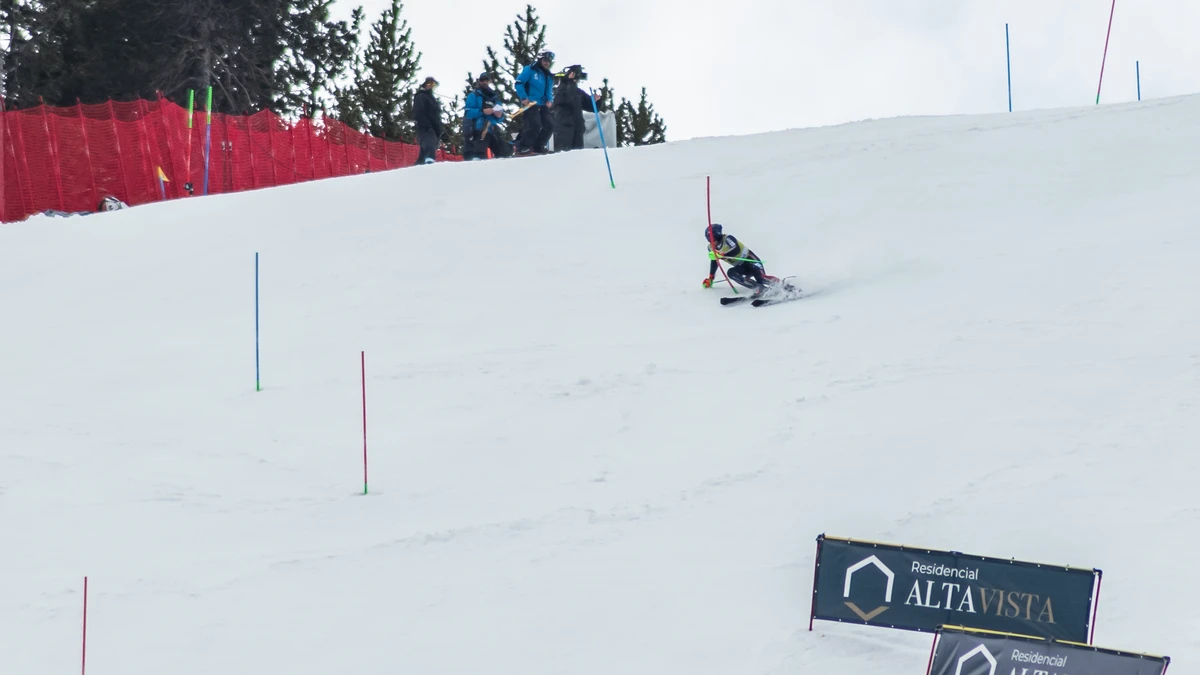
The headline numbers are these: 34 World Cup wins — 26 in slalom, 8 in giant slalom — and 102 podiums. He has won the slalom crystal globe four times, in 2015/16, 2019/20, 2021/22 and 2024/25, a total that ties him with Alberto Tomba and leaves him behind only Ingemar Stenmark, with eight, and Marcel Hirscher, with six. He added the giant slalom globe in 2019/20, giving him five discipline titles in all. The one title he has never won is the big one: the overall World Cup. His best finishes are three second places, in 2015/16, 2017/18 and 2024/25. The slalom-globe record is set out in the Alpine Ski World Cup season preview, and the win totals on his Wikipedia biography.
There is a reason for that missing overall title, and it has a name: Marcel Hirscher. For most of Kristoffersen’s career the Austrian won everything, eight overall titles in a row, and a slalom specialist who never raced a speed event was never going to outscore him across a whole season. When Hirscher retired in 2019, Marco Odermatt took over the same role. Three second places are not failures; they are the record of a man who was second-best in the world in three different seasons while the best happened to be racing at the same time.
The 2024/25 season was his best in years. He finished second overall, won the slalom globe with 662 points — two wins, at Val d’Isère and Kranjska Gora, plus three more podiums — and finished second in the giant slalom standings, with a win in Kranjska Gora that was his eighth in the discipline. That weekend in Kranjska Gora, 1–2 March 2025, gave him the first giant slalom and slalom double weekend of his career, a feat FIS reported at the time. The 2025/26 season that followed was quieter — fifth overall on 821 points, fourth in slalom, seventh in giant slalom — but it contained a piece of history: his win in the Schladming night slalom on 28 January 2026 was his fifth there, a record, passing Benjamin Raich’s four. Schladming at night is the loudest race in skiing, and he has now won it more often than anyone.
Three Olympics, three medals, no gold
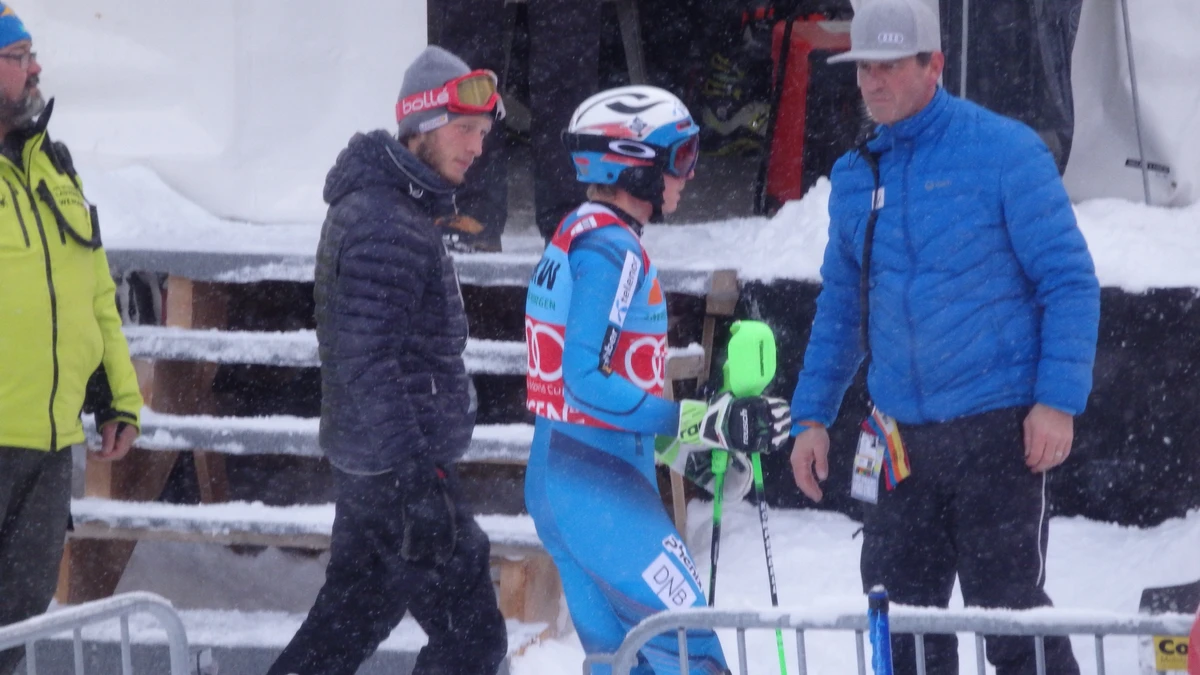
Kristoffersen has been to four Olympic Games and won three medals. At Sochi in 2014, aged nineteen, he took bronze in the slalom — the youngest male Olympic alpine medallist ever at the time. At PyeongChang in 2018 he won silver in the giant slalom, behind Hirscher, and failed to finish the slalom. At Beijing in 2022 he finished fourth in the slalom and eighth in the giant slalom, and went home without a medal. And at Milano-Cortina in February 2026 he won bronze in the slalom, behind Loïc Meillard of Switzerland and Fabio Gstrein of Austria, and finished seventh in the giant slalom. Three medals, no gold, and a career that keeps coming back for more. The Olympic record is on his Wikipedia biography, and the Milano-Cortina slalom result was reported by FIS.
The World Championships tell a brighter story. He won gold in the giant slalom at Åre in 2019, beating Hirscher himself, and gold in the slalom at Courchevel/Méribel in 2023, with a bronze in the slalom at Cortina d’Ampezzo in 2021 in between. At Saalbach in 2025 he left without a medal, thirteenth in slalom and eighth in giant slalom. The Åre gold is the race his supporters point to: on the day, against the greatest skier of his generation, in Hirscher’s best discipline, he was better.
One thing the medal table does not show is how long he has been doing this. He debuted in the World Cup in 2012, won his first race in 2014, and is still winning races in 2026, fourteen years later. In a sport where knees and backs end careers in an afternoon, that longevity is its own achievement.
What the winning actually pays
Here is where the numbers get real, and where they stop. For 2024/25, the FIS prize-money list, reported by NRK on 28 March 2025, put his World Cup prize money at CHF 304,000 — about NOK 3.6 million — the fourth-highest total among the men, behind Odermatt, Meillard and von Allmen, and more than double the season before. The figure is confirmed by the prize-money table on the 2024/25 World Cup season page on Wikipedia, which lists the same CHF 304,000. For the 2025/26 season, a Norwegian tally of the FIS lists put his prize money at NOK 2,504,447, ranked twentieth across all FIS disciplines, in a count published by sportsidioten.no that excludes sponsor and equipment income.
To understand those numbers, it helps to know the scale. The FIS minimum prize for winning a regular World Cup race in 2024/25 was CHF 47,000, from a purse of CHF 144,000 per race, and Kitzbühel pays up to CHF 100,000 for a win; for 2025/26 the FIS approved an increase of about twenty percent. A third-party aggregation, SalarySport, puts his career World Cup prize money at £3,091,464 between 2013 and 2026, the fifth-highest total of any skier, with his best year 2016 at £361,000 — but that is a third-party tally of FIS payouts, not an official FIS total, and it should be read as a rough scale rather than a precise figure. The per-race prize structure is reported by SnowBrains, and the career tally by SalarySport.
What those figures do not include is the larger part of a top skier’s income: sponsorships and equipment deals. And on that subject there is no verified number anywhere. No value has ever been published for any of Kristoffersen’s equipment contracts, and no value has been published for his new helmet deal. Prize money is public because the FIS publishes it. The rest is private, and this article will not fill the gap with a guess.
The twelve-year fight for his own helmet
If there is one story that explains Henrik Kristoffersen better than any race result, it is the helmet. For eighteen years he raced on Rossignol skis, until the end of the 2021/22 season, and then spent four seasons on Van Deer–Red Bull Sports, the brand of his old rival Marcel Hirscher. On 31 March 2026 he split with Van Deer, citing frustrations with the equipment, and on 1 May 2026 he signed with HEAD, joining the HEAD Worldcup Rebels. He changed skis, bindings and boots all at once, with a new technician, Niclas Cronsell — the man who gave him his first Rossignol skis when he was nine. His first race on HEAD was the giant slalom in Sölden on 25 October 2026, where he finished 22nd, seventh after the first run. The switch is documented by Ski Racing Media, which has covered his equipment changes in detail.
The helmet is the longer story. For more than twelve years Kristoffersen fought the Norwegian Ski Federation over the right to put his own sponsor’s logo on his helmet; the federation’s sponsor was Telenor, and it controlled the helmet space. He sued in 2016 and lost in 2019. Then, on 6 October 2026, the federation announced that Red Bull would become the Norwegian alpine team’s new sponsor, and that A-status athletes could sign individual Red Bull contracts and show the logo on the front of their helmets and on their hats. Kristoffersen and Timon Haugan signed those contracts. Athletes keep sixty percent of the individual helmet-sponsor income, and the federation takes forty. He has said he plans to race until 2030 at the latest. The settlement is reported by Ski Racing Media, and it is, by any measure, the end of the longest commercial dispute in Norwegian skiing — won, in the end, by the skier who refused to drop it.
His helmet itself, meanwhile, is made by Sweet Protection, the Norwegian brand, which sells a Team Edition helmet carrying his name. It is a small detail, but it fits the pattern of his career: a Norwegian skier, on Norwegian equipment where he can choose it, fighting for the right to choose it. The 2026/27 season is now under way, and the question is whether, at 32, on new skis, with the helmet fight behind him, he can put together the overall title that has always escaped him.
The fair summary: Henrik Kristoffersen Net Worth 2026
Henrik Kristoffersen Net Worth 2026 is unconfirmed, and after everything above, that should not be a surprise. He is 32 years old, a 34-time World Cup winner, a four-time slalom globe winner, a three-time Olympic medallist and a two-time world champion, with verified prize money of CHF 304,000 in 2024/25 and NOK 2,504,447 in 2025/26. There is no published tax-list income or wealth figure for him — no VG, DN or NRK article has ever printed one — and the 2025 tax lists, covering the 2024 income year, are not due until 2 December 2026. One company figure is public, and it must be handled with care: his Henrik Kristoffersen Ski Racing AS shows 2024 operating income of NOK 208,000 and equity of NOK 18,635,000 — but company equity is not personal wealth, and it is not a net worth. There is no credible net-worth estimate to quote, so there is no net worth number in this article, only the facts that would have to support one if it ever appears. What is certain is the career: the most successful Norwegian technical skier of his generation, still winning at 32, still chasing the overall title, and finally free to wear the sponsor he fought twelve years for on his own helmet.
Sources & References
- Wikipedia — Henrik Kristoffersen (biography, World Cup record, Olympic and World Championship medals): https://en.wikipedia.org/wiki/Henrik_Kristoffersen
- Ski Racing Media — Henrik Kristoffersen joins HEAD Worldcup Rebels (biography, equipment switch): https://skiracing.com/henrik-kristoffersen-head-world-cup-rebels/
- Ski Racing Media — Henrik Kristoffersen leaves Van Deer (split, March 2026): https://skiracing.com/henrik-kristoffersen-leaves-van-deer-next-brand/
- Ski Racing Media — Norwegian skiers’ helmet marketing rights (Red Bull settlement, October 2026): https://skiracing.com/norwegian-skiers-helmet-marketing-rights/
- Alpine Ski World Cup — Who to watch: Levi men’s slalom (slalom globes, Levi record): https://www.alpineskiworldcup.com/post/who-to-watch-levi-men-s-alpine-ski-world-cup-slalom
- FIS — Kristoffersen completes big-goal double at Kranjska Gora (March 2025): https://www.fis-ski.com/alpine-skiing/news/2024-25/kristoffersen-completes-big-goal-double-at-kranjska-gora-with-slalom-gold
- FIS — Meillard completes Olympic collection with gold in slalom (Milano-Cortina 2026): https://www.fis-ski.com/alpine-skiing/news/2025-26/meillard-completes-olympic-collection-with-gold-in-slalom
- Wikipedia — 2024–25 FIS Alpine Ski World Cup (prize-money table, CHF 304,000): https://en.wikipedia.org/wiki/2024%E2%80%9325_FIS_Alpine_Ski_World_Cup
- sportsidioten.no — FIS prize money 2025/26 (NOK 2,504,447): https://www.sportsidioten.no/alpint/premiepenger-fis-2025-26/
- SnowBrains — FIS approves prize-money increase for 2025/26 (per-race purses): https://snowbrains.com/fis-approves-prize-money-increase-across-all-world-cup-disciplines-for-2025-26-season/
- SalarySport — Henrik Kristoffersen career prize money (third-party tally, use with caution): https://salarysport.com/alpine-skiing/player/henrik-kristoffersen/
- Sweet Protection — Henrik Kristoffersen athlete page (Team Edition helmet): https://www.sweetprotection.com/us/en/discover-sweet/our-athletes/henrik-kristoffersen/
- ESPN — Kristoffersen ends drought, wins last World Cup slalom before Olympics (Schladming record 5th win, January 2026): https://www.espn.ph/olympics/skiing/story/_/id/47758338/henrik-kristoffersen-ends-drought-wins-last-world-cup-slalom-olympics
- Olympedia — Beijing 2022 men’s slalom results (4th place): https://www.olympedia.org/results/19019505