
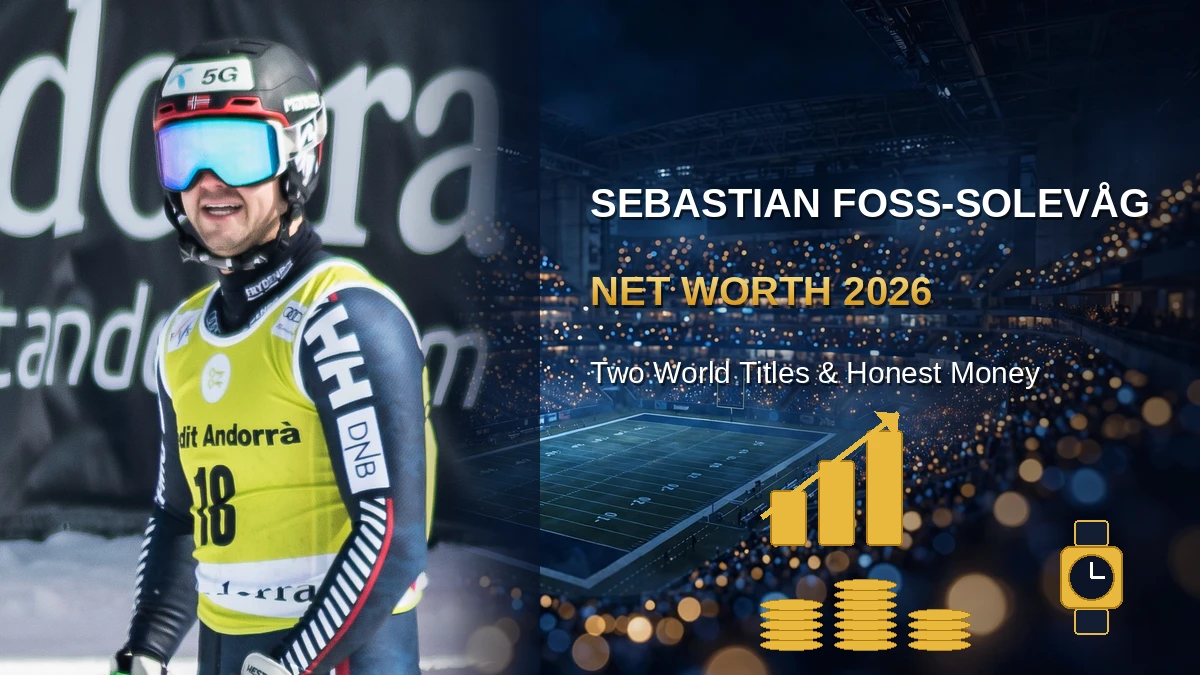

Sebastian Foss-Solevåg Net Worth 2026 is unconfirmed — no published income figure, no tax-list entry and no credible estimate exists for the retired Norwegian slalom skier, and this article will not invent one. That is the honest answer for a man who spent thirteen winters on the World Cup circuit, won two world titles in a single week at Cortina in 2021, took Olympic bronze in Beijing a year later — and then, in May 2025, walked away from the sport at 33, before the Olympic winter of 2026 began. What can be verified is a career of narrow brilliance: two World Cup wins, five podiums, all of them in slalom, and a world title that made him the first Norwegian men’s slalom world champion in twenty-four years. His career is set out on his English Wikipedia biography.
Ålesund, and a slalom-only career
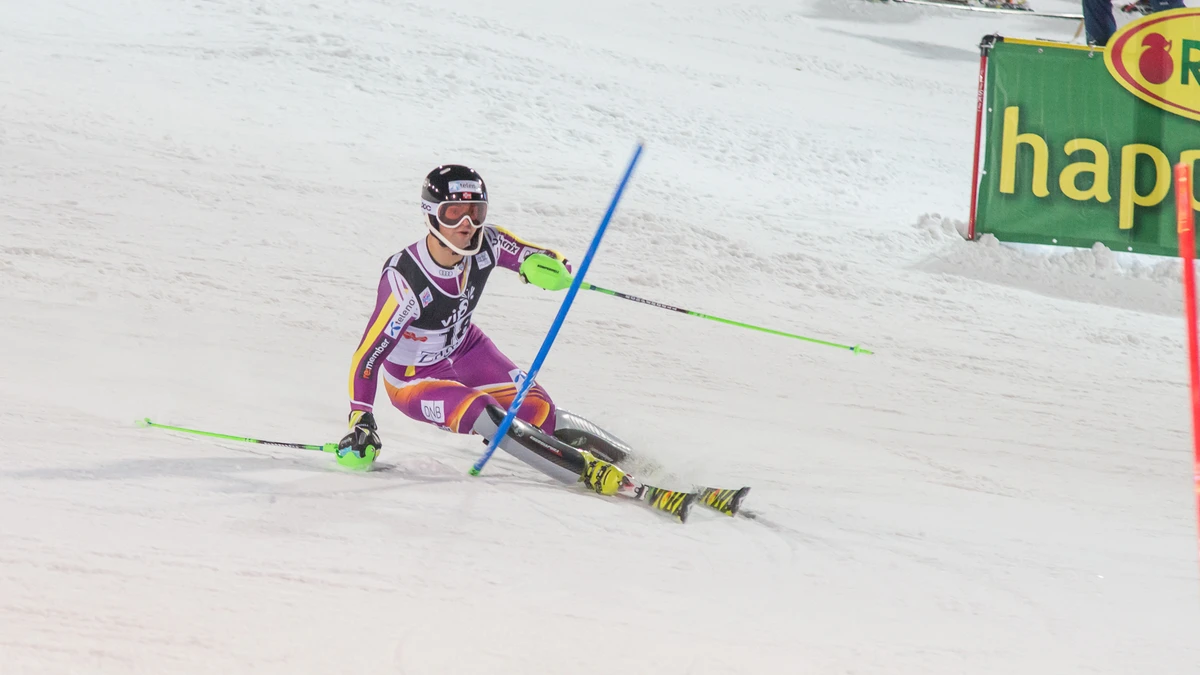
Sebastian Johann Foss-Solevåg was born on 13 July 1991 in Ålesund, a town on the west coast of Norway, and he races — raced — for Spjelkavik IL, the club from the district of the same name. He is 1.82 metres tall, and he was a slalom specialist: across thirteen World Cup seasons he started 121 slalom races, with two wins, five podiums and forty top-ten finishes in the discipline, and his individual record sits entirely in slalom. Away from the snow he studied at the Inland Norway University of Applied Sciences, where he was listed among the student-athlete medallists at the PyeongChang 2018 Winter Olympics, as the European University Sports Association records. His life and career are set out on his English Wikipedia biography.
He made his World Cup debut at Levi, Finland, in 2012 — the exact date, 17 November 2012, is given by Wikipedia — and it took a year before he scored his first World Cup points, also at Levi, finishing ninth from start bib 55 in 2013. The first podium came at Zagreb, Croatia, on 6 January 2015, when he finished third in the slalom, and the second came at St. Moritz, Switzerland, on 20 March 2016, also third. His early career is described on his English Wikipedia biography and in Ski Racing’s profile. None of that answers Sebastian Foss-Solevåg Net Worth 2026, but it explains why the question gets asked: by his mid-twenties, he was already the kind of athlete people assume must be rich.
Cortina 2021: two golds in one week
The week that defined him came at Cortina d’Ampezzo, Italy, in February 2021. On 17 February, Norway won gold in the team parallel event, beating Sweden in the final, with Foss-Solevåg on the team. Four days later, on 21 February, he won the men’s slalom in 1:46.48, ahead of Austria’s Adrian Pertl and his teammate Henrik Kristoffersen — the first Norwegian men’s slalom world champion since Tom Stiansen in 1997. The slalom gold is recorded on the Wikipedia page for the 2021 men’s slalom, and Ski Racing’s report carries the result.
The rest of his World Championship record shows how hard that week was to repeat. At Beaver Creek in 2015 he finished ninth in the slalom and fifth in the team event; at St. Moritz in 2017 he did not finish the first slalom run and was fifth in the team event again; at Åre in 2019 he was twelfth in the slalom, 34th in the combined and fifth in the team event; at Courchevel in 2023 he was nineteenth in the slalom; and at Saalbach in 2025, his last World Championships, he did not finish the first slalom run on 16 February 2025. He contested six World Championships in all, and his total medal count is two, both gold, both from that one week in Cortina. The record is set out on his English Wikipedia biography.
The World Cup record around those titles is just as narrow, and just as honest. His two individual World Cup wins both came in the winter of 2020–21: Flachau, Austria, on 17 January 2021, his first career win, and the night slalom at Madonna di Campiglio, Italy, on 22 December 2021. His five individual podiums were Zagreb on 6 January 2015 (third), St. Moritz on 20 March 2016 (third), Madonna di Campiglio on 22 December 2020 (second), Flachau on 17 January 2021 (first) and Madonna di Campiglio on 22 December 2021 (first). His best season was 2021, when he finished 14th overall with 431 points and fifth in the slalom standings — a position he had also held in 2020 — and he was Norwegian slalom champion in 2013, 2015 and 2021. The wins are recorded in FIS’s own Flachau report, and the full record is on his English Wikipedia biography and his Ski-DB profile.
Two Olympic bronzes, eight years apart
The Olympic record starts at Sochi in 2014, where he finished ninth in the slalom on his Olympic debut, aged 22. Four years later, at PyeongChang 2018, he won his first Olympic medal: bronze in the mixed team event, alongside Nina Haver-Løseth, Kristin Lysdahl, Maren Skjøld, Leif Kristian Nestvold-Haugen and Jonathan Nordbotten. He was also tenth in the individual slalom at those Games, and did not finish the second run of the combined. The record is set out on his English Wikipedia biography.
The second bronze, and the better one, came at Beijing 2022. In the men’s slalom on 16 February 2022, he was third after the first run in 53.98, and fifteenth-fastest in the second run in 50.81, for a total of 1:44.79 — behind France’s Clément Noël, who won gold in 1:44.09, and Austria’s Johannes Strolz, who took silver in 1:44.70. He edged his teammate Henrik Kristoffersen into fourth place by a fraction of a second. The result is recorded on the Wikipedia page for the 2022 men’s slalom and on Olympedia’s results page.
His Olympic totals are three Games — Sochi 2014, PyeongChang 2018 and Beijing 2022 — and two bronze medals, one from a team event and one from an individual race, with no gold. And the fourth Games never happened. He did not compete at Milano-Cortina 2026: he had retired in May 2025, before the season, and he was not on Norway’s 2025/26 team at all. His retirement is reported by Bluewin, and the article states the point plainly so that nobody reads an Olympic appearance into 2026 that never took place.
The long fade, and a retirement at 33
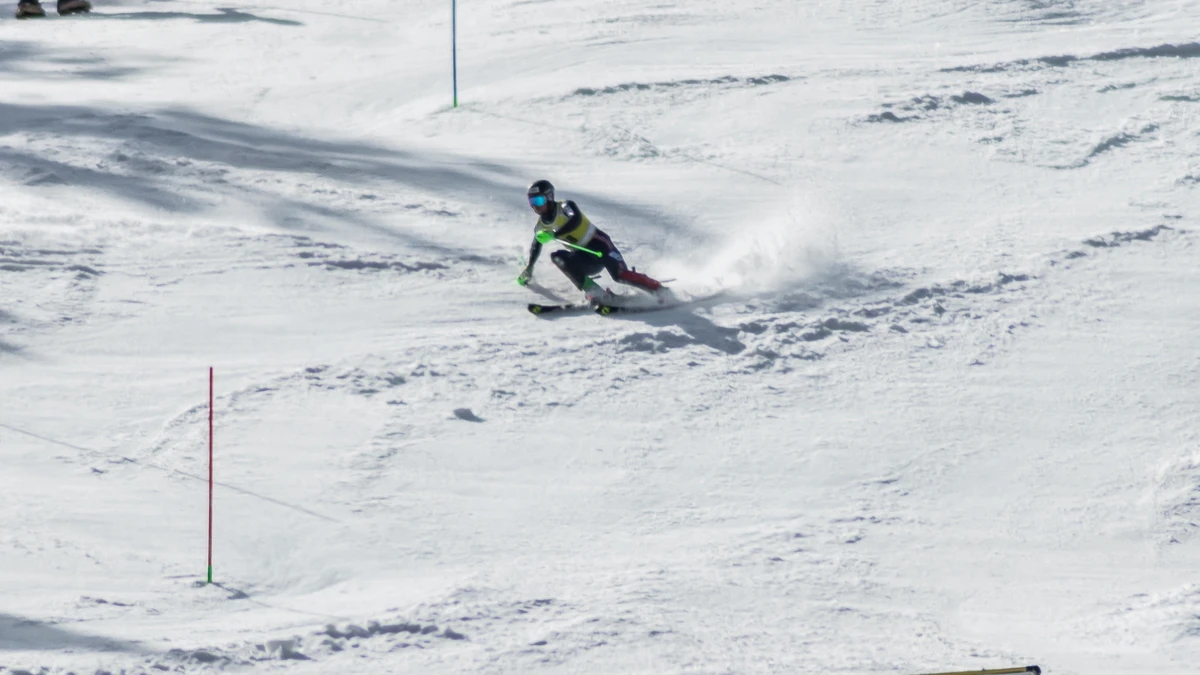
The last three seasons explain the retirement better than any statement could. In 2023–24 he finished 100th overall with 34 points and 36th in the slalom standings, with no podium and no top-ten finish anywhere: his best results were 20th at Aspen on 3 March 2024, 21st at Schladming on 24 January 2024, 24th at Adelboden on 7 January 2024 and 25th at Gurgl on 18 November 2023. In 2024–25 it was worse — 132nd overall with 12 points and 46th in the slalom standings, with his only points finish of the whole season a 19th place at Levi on 17 November 2024, worth 12 points. Everything else that winter was a first-run failure, a second-run failure or a failure to qualify for the second run. The season tables are on his English Wikipedia biography and his Ski-DB profile.
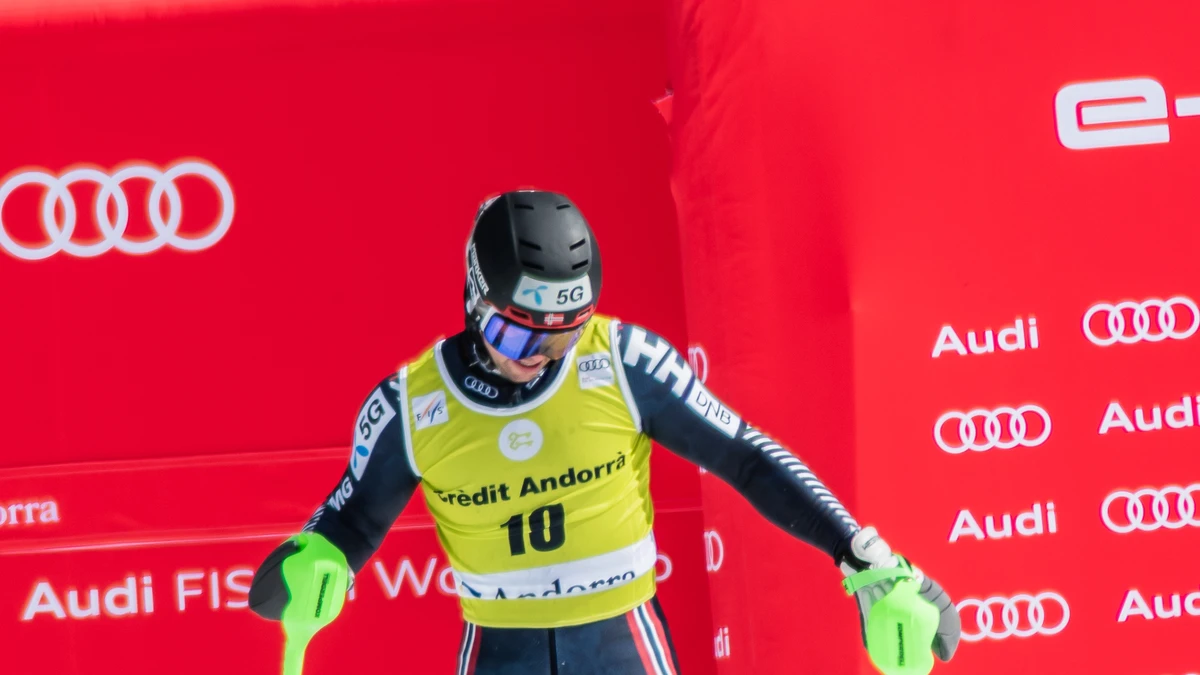
He announced his retirement on Instagram on 14 May 2025, aged 33, in his own words: “Skiing has taught me so much, but now it’s time to do something new… One chapter ends, and a new one begins. I’ve worked my entire childhood and adult life to become the best in the world in slalom. Now it’s time to do something different.” His last World Cup race had already happened, at Hafjell, Norway, on 16 March 2025, where he finished 47th in the first run and did not qualify for the second. The announcement is reported by Bluewin, and his final race is recorded on his Ski-DB profile.
What he has actually earned
Start with prize money, because in alpine skiing that much is public, and it is also modest by the standards of the sports that make people rich. FIS sets a minimum purse for every World Cup race: in the 2024–25 season the organiser had to make at least CHF 144,000 available per race, with CHF 47,000 going to the winner, CHF 22,000 to second, CHF 12,000 to third and CHF 9,000 to fourth, and the great Kitzbühel races paid as much as CHF 100,000 for a win, as SnowBrains reported. For the 2025–26 season the currency changed to euros, with a minimum of €167,619 per race and at least €54,709 for first place, €25,608 for second and €13,968 for third, down to €816 for 30th, as SnowBrains’ earnings round-up records.
But those are the rates, not his earnings — and the honest numbers for him are much thinner. He earned nothing in 2025–26, because he was retired. His only points finish in 2024–25 was 19th at Levi, a small four-figure prize under the published scale, and the exact 19th-place amount was not verified in the sources retrieved, so no number is stated here. No published season total and no published career total exists for Foss-Solevåg, and no Salary Sport page exists for him at all — the site has no alpine-skiing tally for him to cite — so no aggregator figure is presented here either. That is the honest starting point for Sebastian Foss-Solevåg Net Worth 2026: a published prize scale, two World Cup wins from 2021, and no total attached to either of them. The exact winner’s prize for those two 2021 wins was not verified, and the CHF 47,000 figure from the 2024/25 scale must not be back-applied to them.
None of those figures, on their own, answers Sebastian Foss-Solevåg Net Worth 2026 — they are gross prize money, before tax, team costs and everything else a season costs, and World Championship and Olympic medals carry no FIS prize money at all. The rest of a ski racer’s income is sponsorship, and there the numbers stop. His equipment was Salomon skis and boots, and his race suit carried the Norwegian team’s kit from Helly Hansen, as Helly Hansen’s team page shows. Those are national-team sponsors, not personal deals, and no personal sponsorship contract and no sponsorship value has been published anywhere for him.
What does not exist
The rest of the picture is absence, and it matters enough to spell out. Search for Sebastian Foss-Solevåg Net Worth 2026 and you will find no net-worth estimate for him at all — no dollar figure, no content-farm article, nothing to quote and nothing to dismiss. The most complete public record of his career is his English Wikipedia biography, and it carries no financial figure of any kind. There is nothing to label unverified here, because no figure circulates to label — and none is invented to fill the gap.
No published tax-list income or wealth figure for Sebastian Foss-Solevåg has been found either. Norway’s tax lists for 2025 are not published until 2 December 2026, as Skatteetaten confirms, so no figure from them can exist yet — and no earlier tax-list figure for him has been published by any Norwegian newspaper, with searches for his name alongside the tax lists returning nothing. No company fortune or property portfolio has been published in connection with his name, and no salary, advance or royalty total has ever been reported in the Norwegian press. Sebastian Foss-Solevåg Net Worth 2026 stays unconfirmed because the only honest number is none.
The fair summary: Sebastian Foss-Solevåg Net Worth 2026
So where does that leave it? Sebastian Foss-Solevåg is 35 years old, retired since May 2025, a double world champion from Cortina 2021 and a double Olympic bronze medallist from PyeongChang 2018 and Beijing 2022, with two World Cup wins, five podiums and a best overall finish of 14th behind him, and no Olympic appearance in 2026 because he had already walked away. His verified earnings are a published prize scale and a single 19th-place finish in his final season — no season total, no career total, no aggregator tally and no sponsor value anywhere. He has no published tax figure, no published company fortune and no credible net-worth estimate anywhere, because no figure for him exists in print at all. Until the 2025 tax lists appear on 2 December 2026, or a real figure is published somewhere with a source attached, the fair summary of Sebastian Foss-Solevåg Net Worth 2026 is the same as the opening line: unconfirmed, and not to be guessed at.
Sources & References
- Wikipedia — Sebastian Foss-Solevåg (biography, career, Olympics, World Championships, World Cup totals): https://en.wikipedia.org/wiki/Sebastian_Foss-Solev%C3%A5g
- EUSA — Student-athletes won several medals at the PyeongChang Winter Olympics (Foss-Solevåg listed as a student at Inland Norway University of Applied Sciences): https://www.eusa.eu/student-athletes-won-several-medals-at-the-pyeongchang-winter-olympics
- Ski Racing — Sebastian Foss-Solevåg wants to be more than a slalom skier (World Cup debut at Levi 2012, first points at Levi 2013): https://www.skiracing.com/sebastian-foss-solevaag-wants-to-be-more-than-a-slalom-skier/
- Wikipedia — FIS Alpine World Ski Championships 2021, Men’s slalom (slalom gold 21 February 2021, 1:46.48): https://en.wikipedia.org/wiki/FIS_Alpine_World_Ski_Championships_2021_%E2%80%93_Men%27s_slalom
- Ski Racing — Foss-Solevåg wins slalom gold at Ski Worlds (Cortina 2021 slalom gold): https://www.skiracing.com/foss-solevag-wins-slalom-gold-at-ski-worlds/
- FIS — Worth the wait for Foss-Solevåg (first World Cup win, Flachau, 17 January 2021): https://www.fis-ski.com/alpine-skiing/news/2020-21/worth-the-wait-for-voss-solevaag
- Ski-DB — Sebastian Foss-Solevåg profile (121 slalom starts, 2 wins, 5 podiums, 40 top tens; season results): https://www.ski-db.com/db/profiles/sebastian-foss_solevaag_nor_422082.php
- Wikipedia — Alpine skiing at the 2022 Winter Olympics, Men’s slalom (Beijing 2022 bronze, 1:44.79): https://en.wikipedia.org/wiki/Alpine_skiing_at_the_2022_Winter_Olympics_%E2%80%93_Men%27s_slalom
- Olympedia — Men’s slalom results, Beijing 2022 (Noël 1:44.09, Strolz 1:44.70, Foss-Solevåg 1:44.79): https://www.olympedia.org/results/19019505
- Bluewin — Norwegian ski star ends his career (retirement announced 14 May 2025, aged 33; not on Norway’s 2025/26 team): https://www.bluewin.ch/en/sport/ski/norwegian-ski-star-ends-his-career-2695645.html
- SnowBrains — FIS Approves Prize Money Increase Across All World Cup Disciplines for 2025–26 Season (CHF 144,000 purse, CHF 47,000 winner, Kitzbühel up to CHF 100,000): https://snowbrains.com/fis-approves-prize-money-increase-across-all-world-cup-disciplines-for-2025-26-season/
- SnowBrains — FIS Alpine World Cup Prize Money 2025-26 (minimum €167,619 per race, at least €54,709 for first place; FIS switched to euros): https://snowbrains.com/the-highest-earning-ski-racers-of-the-2025-26-fis-alpine-world-cup-season/
- Helly Hansen — Meet the Norwegian Alpine Ski Team (Foss-Solevåg listed on the Norwegian team’s kit page): https://www.hellyhansen.com/journal/meet-the-norwegian-alpine-ski-team
- Skatteetaten — Search the tax lists (2025 tax lists published 2 December 2026): https://www.skatteetaten.no/en/person/taxes/tax-assessment/search-the-tax-lists/